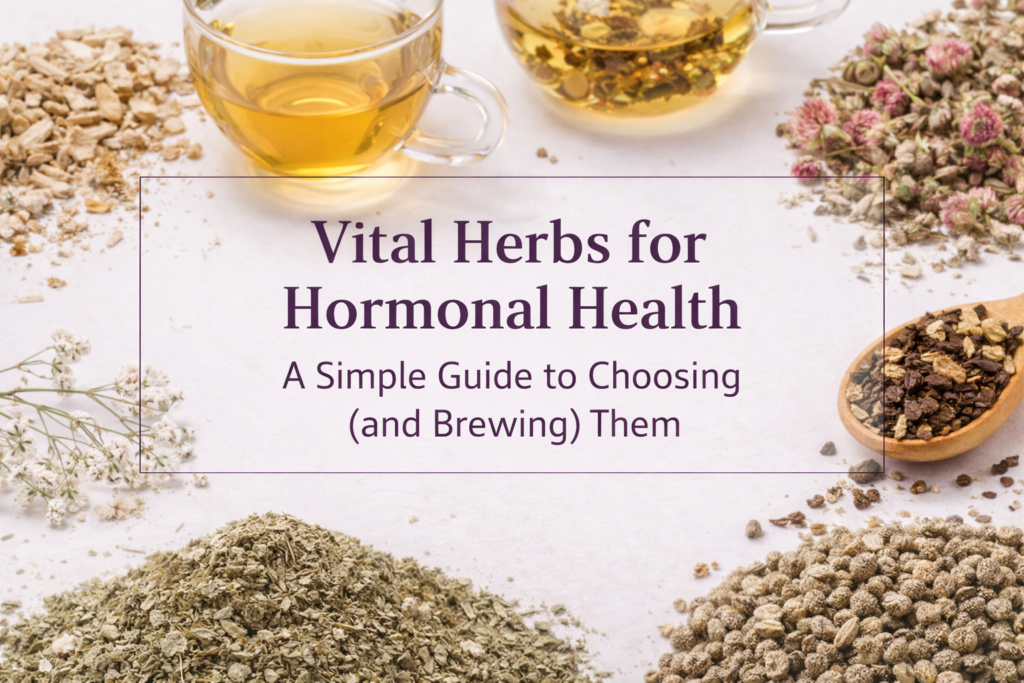
Mood swings, fatigue, poor sleep, and hormonal acne—these symptoms often stem from one root issue: hormone imbalance. Whether you’re navigating PMS, perimenopause, or postpartum recovery, your emotional and physical state is shaped by shifts in estrogen, progesterone, and cortisol. Rather than suppressing symptoms, herbal medicine offers a supportive, adaptive approach to help your body regulate itself more effectively. Understanding the Hormone-Mood Link Hormones like estrogen and progesterone are closely tied to your brain chemistry. Estrogen influences serotonin, which regulates mood and sleep. Progesterone has a natural calming effect on the nervous system, helping with rest and emotional regulation. Meanwhile, high cortisol (the stress hormone) can disrupt both, leading to irritability, tension, and poor sleep. The goal of herbal support is not to override your body, but to support it through these natural transitions. Herbs That Support Hormonal Balance • Shatavari: Often called the “queen of herbs” in Ayurveda, it supports reproductive health, emotional resilience, and moisture balance—especially during perimenopause or postpartum. • Maca: A root vegetable from Peru traditionally used to boost energy, mood, and libido. It helps stabilize hormonal fluctuations and is especially beneficial during perimenopause. • Vitex (Chasteberry): Helps regulate ovulation and the menstrual cycle, making it useful for PMS-related mood shifts and irregular periods. • Lemon Balm: A gentle herb that soothes nervous system tension and supports rest and digestion—both key during hormonal shifts. How to Reset with STH Products These formulas are designed to work together, supporting your hormonal rhythms gently and consistently: Pause Potion Created for women experiencing perimenopause or menopause, Pause Potion contains hormone-balancing herbs like shatavari, dong quai, and maca to support emotional and physical symptoms such as hot flashes, irritability, and low energy. Happy Hormone Juice A versatile daily tonic that addresses PMS, mood swings, and stress-related hormonal imbalances. With ingredients like ashwagandha, shatavari, and lemon balm, it helps restore emotional steadiness and supports adrenal function. Dream Tea Poor sleep worsens hormonal symptoms. Dream Tea combines tulsi, lemon balm, and chamomile to relax the nervous system and improve sleep quality, indirectly supporting hormone function. Sample Daily Routine • Morning: 1–2 dropperfuls of Happy Hormone Juice with breakfast • Afternoon: Short walk or sunlight exposure + healthy snacks to support blood sugar • Evening: 1–2 dropperfuls of Pause Potion, followed by Dream Tea about an hour before bed Lifestyle Tips That Work with Herbs • Support your blood sugar by eating regular meals with protein and fat—this reduces cortisol spikes. • Manage stress with breathwork, light movement, or herbal teas like Dream Tea. • Limit caffeine, especially before your period or during perimenopausal flares. • Track your cycle if menstruating, so you can anticipate and prepare for hormonal changes. Finding Your Body Rhythm To Be More Yourself Herbs won’t instantly eliminate symptoms, but they can make hormonal transitions feel less extreme and more manageable. Products like Pause Potion, Happy Hormone Juice, and Dream Tea aren’t quick fixes—they’re tools to help your body find rhythm again. Consistency is key. With the right herbal support and small lifestyle shifts, you can reduce the emotional and physical toll of hormonal changes—and feel more like yourself again.